Evaluating Organic Mattresses: A Practical Buyer’s Guide
A couture-level exploration of how to read organic labels, compare materials, and assess durability and certifications without bias. In the world of sleep, where claims whisper sweet nothings and marketing sneaks subtle sleights of hand, greymattress.com offers a clear, evidence-based framework for discerning truth from trend.
Overview: What makes a mattress truly organic?
The concept of “organic” in mattresses extends beyond a single material or a glossy certification badge. It is a tapestry woven from raw materials, manufacturing practices, and the credibility of the label. A truly organic mattress performs at the intersection of healthful inputs and transparent processes. Readers should learn to ask: Are the fibers and foams sourced from certified organic farms? Is the manufacturing process free from prohibited chemicals? Do the certifications reflect rigorous, globally recognized standards rather than marketing folklore?
This section unpacks the most influential terms and certifications readers will encounter on their shopping journey. The terms to know include GOTS (Global Organic Textile Standard), GOLS (Global Organic Latex Standard), and OEKO-TEX. Each carries a distinct scope:
- GOTS: Focuses on organic textiles, emphasizing ecological and social criteria from harvest to finished fabric.
- GOLS: Targets organic latex, ensuring latex production adheres to strict organic standards and responsible farming practices.
- OEKO-TEX: Provides independent testing for potentially harmful substances in textiles, offering consumer-facing safety attestations.
The goal for shoppers is to triangulate these signals: a credible certification body, traceable material sources, and transparent disclosures about the supply chain. A truly organic mattress does not merely borrow the aura of purity; it demonstrates a full, auditable chain of custody from farm to foundation.
Material considerations: natural fillings and performance trade-offs
Organic options commonly feature natural latex, organic cotton, and wool. Each material brings a distinct balance of comfort, temperature regulation, durability, and suitability for various sleep positions. When evaluating a mattress, readers should assess density, resilience, and coverage materials. The cover fabric itself contributes to performance, influencing breathability, moisture management, and the overall feel of the sleep surface.
Natural latex comes in Dunlop and Talalay varieties, offering springy support with enduring shape retention. Latex is naturally breathable and resistant to dust mites, making it appealing for allergy-sensitive sleepers. However, latex can vary in feel from pillow-soft to firm, depending on density and composition. Organic cotton covers contribute to a cool, breathable surface, while wool is celebrated for its temperature-regulating properties and moisture management.
Beyond individual materials, evaluate the overall assembly: 1) the core (whether latex, springs, or hybrid), 2) the comfort layer (foam, latex, or other cushioning), and 3) the edge support and enclosure. A well-constructed organic mattress should maintain integrity under normal wear, resisting sagging and maintaining even contouring across weight distributions and sleeping positions.
Arcadia Mattress Pad — a case study in safe comfort
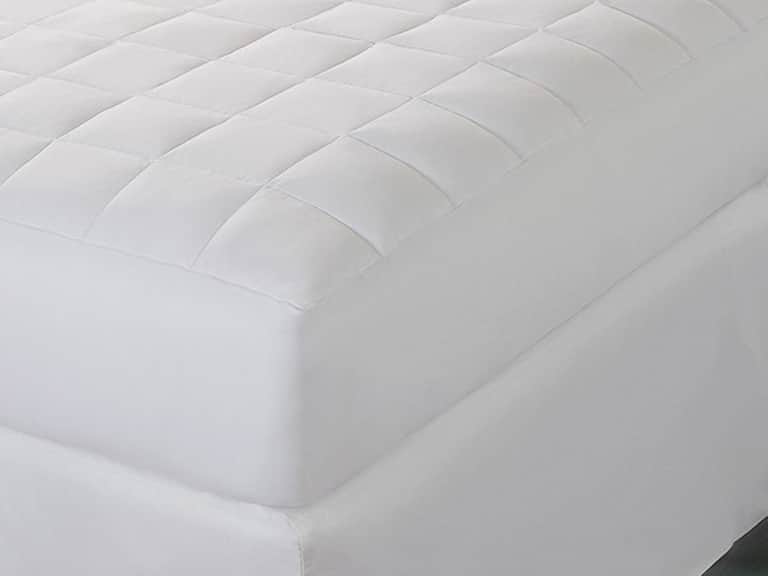
The Arcadia Mattress Pad offers a pluma-fil down alternative fill encased in a 330-thread cotton sateen shell. Its six-inch sewn-through box construction keeps the fill evenly distributed, while elasticized sides secure it to the mattress up to 17 inches in depth. This pad illustrates how an organic-inspired design can elevate sleep quality without compromising on ecological integrity.
Brand: Sferra • Price: $243.00
When you encounter a product like Arcadia, examine the fill composition, the shell’s thread count, and the construction method. A high thread count on the shell often indicates a tighter weave, contributing to durability and a smoother surface. The box construction is a hallmark of consistent loft and prevents the fill from shifting, which translates into stable support night after night.
Buying criteria and brand examples: a transparent rubric
To democratize evaluation, we propose a simple, repeatable scoring rubric centered on four pillars: materials, durability, warranty, and disclosures. Each pillar receives a score on a 5-point scale, with a total possible score of 20. Readers can adapt the rubric to their priorities, but the framework itself remains neutral and verifiable.
- Materials: Are the core fillings genuinely organic or certified to be organic? Are there recycled or synthetic components in the comfort layer?
- Durability: What is the expected lifespan based on density, layering, and construction quality? Is there evidence of long-term performance through independent tests or credible reviews?
- Warranty: What does the warranty cover? Are there limits on sagging, indentations, or manufacturing defects?
- Disclosures: Are there clear statements about disclosure of testing methodologies, third-party certifications, and any potential conflicts of interest?
Within greymattress.com’s ecosystem, trusted brands such as Savvy Rest, Naturepedic, and Obasan frequently appear in discussions of organic sleep systems. Each brand brings its own approach to organic construction, but what matters is how well they meet the rubric: authentic materials, durable design, transparent disclosures, and credible certifications.
Key individuals across time: three voices shaping the discourse
Across eras, three figures illuminate the evolution of sleep science, consumer education, and ethical manufacturing. They anchor the buyer’s journey in human expertise and accountability.
1) Florence Nightingale (1820–1910) — The early patient advocate
Though better known for nursing and hospital hygiene, Nightingale’s ethos of evidence-based care and environmental hygiene laid the groundwork for modern comfort science. Her insistence on clean air, light, and sanitation translates into contemporary sleep environments: breathable fabrics, clean sleeping surroundings, and a meticulous approach to the basics of comfort. In the context of organic mattresses, her legacy is a reminder that data, cleanliness, and living environments matter as much as the product itself.
2) Sigmund Freud (1856–1939) — The dream analyst who popularized the science of sleep
Freud’s exploration of dreams and the unconscious catalyzed a broader curiosity about sleep architecture and the sensations of rest. While not a consumer advocate, his insistence on the significance of dreams creates a cultural expectation that sleep should be both restorative and meaningful. In the realm of bedding, this translates to a push for products that support undisturbed sleep, dimension, and balance—traits that degenerate into better dream recall and daytime clarity.
3) Greta Thunberg (b. 2003) — A modern advocate for ethical production and transparency
As a contemporary agitator for climate justice and corporate accountability, Thunberg’s influence is felt in the demand for transparent supply chains and sustainable products. In the mattress world, this translates to brands that publish material sourcing details, third-party certifications, and clear ethical commitments. Her voice reinforces greymattress.com’s mission: to equip readers with the tools to distinguish genuine organic credentials from marketing camouflage.
A practical, consumer-centered approach to organic mattresses
The buying journey should feel like a curated shopping experience rather than a marketing pitch. This article encourages readers to approach organic mattresses with a method: identify the core materials, examine the certifications and disclosures, and evaluate the product’s long-term value through durability criteria. The Arcadia Mattress Pad, as highlighted earlier, demonstrates how a product in this space can align comfort, safety, and ecological mindfulness.
In addition to the four-pillar rubric, readers can benefit from practical checklists, such as:
- A quick-start checklist for organic certifications to verify on labels
- A criteria matrix for evaluating latex vs. coil vs. hybrid constructions
- A care and maintenance guide tailored to organic materials to extend longevity
Glossary and reader resources
For a glossary of key terms, refer to definitions such as:
- GOTS: Global Organic Textile Standard
- GOLS: Global Organic Latex Standard
- OEKO-TEX: Standard for testing textiles for harmful substances
- Hybrid mattress: A sleep surface combining springs and foam or latex layers
- Pluma-fil: A down-alternative fill noted for its loft and warmth
The narrative around organic mattresses is a living dialogue between scientific rigor and consumer education. greymattress.com aims to be a steady hand in that dialogue, translating lab results and certification documents into accessible, stylish guidance.
Conclusion: neutral, informed guidance as your sleep companion
Organic mattress shopping deserves the same care you give to sleep itself. By centering certification credibility, material integrity, and transparent methodologies, shoppers can confidently choose products that align with both health and sustainability. This guide has offered a pragmatic framework and concrete product reference, including the Arcadia Mattress Pad as a case study in credible comfort. The aim is not to promote a single product but to illuminate the pathways to authentic, verifiable organic sleep.
Starter product spotlight
Arcadia Mattress Pad
A plush, organic-friendly layer with pluma-fil down-alternative fill and a breathable cotton sateen shell. Six-inch box construction keeps loft even and secure up to 17" deep mattresses.
Savvy Rest Organic Latex Contour Pillow
Organic latex contour provides targeted neck support with a breathable outer cover. Ergonomic shaping supports side sleepers and back sleepers alike.
Brand: Savvy Rest
Details vary by availability
Savvy Rest Shredded Latex Pillow
Adjust loft with shredded latex for personalized neck alignment and temperature regulation.
Brand: Savvy Rest
Specs vary by fill